Menu engineering for Indian restaurants: stars, dogs and the silent margin leak
Your best-seller is not always your best dish. Sometimes it is the one that keeps the kitchen busy while the margin walks out the door.
YYUVAVI/POS editorialWritten for people who run the floor
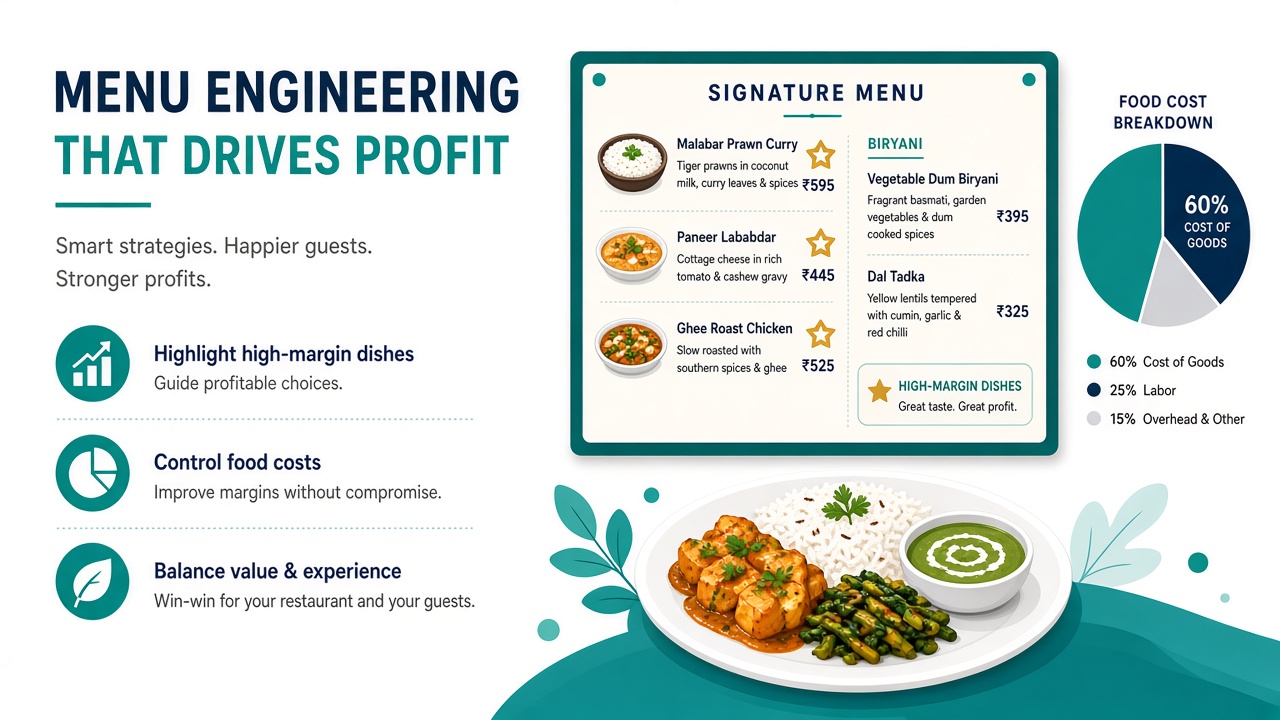
Four boxes, not a vibes ranking
Menu engineering sorts every dish by how often it sells and how much contribution it leaves after food cost. High volume and high contribution are stars. High volume and low contribution are plough horses — loved, but they need a price or portion fix. Low volume and high contribution are puzzles worth featuring. Low volume and low contribution are dogs.
Without recipe cost on the same screen as item sales, you are sorting by memory. Memory favours the dish the owner likes.

What to do once the boxes are clear
Stars go where eyes land first on the card and on the QR menu. Plough horses get a small price rise, a smaller portion, or a cheaper garnish — not a social media push that sells more of a thin dish.
Puzzles need a photo, a better name, or a waiter cue. Dogs leave the menu unless they are a religious or festival necessity you keep for reasons other than profit.
- Re-run the matrix after every vendor price change on top ingredients
- Update QR, printed and aggregator menus the same day you drop a dog
- Brief staff: which two dishes to suggest when a guest asks “what is good?”
Design that quietly steers the order
Guests do not read every line. They scan. Boxes, photos and the first items in a category carry disproportionate weight. Put a star in each of those positions and a plough horse next to a slightly higher-priced star so the star feels fair.
Avoid decorating every item. When everything is highlighted, nothing is.
One number to watch for thirty days
After you redesign, watch contribution from the top ten sellers, not only revenue. Revenue can rise while margin falls if you accidentally featured a plough horse.
If contribution per cover is flat or down, reverse the last design change before you change anything else.
Questions people ask
What is menu engineering for a restaurant?
Sorting dishes by how often they sell and how much contribution they leave after food cost — then featuring stars, fixing plough horses, promoting puzzles and removing dogs.
How often should restaurants re-run menu engineering?
After major vendor price changes on top ingredients, and at least once a quarter. A matrix built on last year's costs steers you toward the wrong dishes.