Self-service kiosks in Indian restaurants: when the queue is the problem
A kiosk is not a status symbol. It is a second counter that never forgets a modifier and never argues about the price on the board.
YYUVAVI/POS editorialWritten for people who run the floor
Put a kiosk where the bottleneck is
If guests wait ten minutes only to say “the same as last time” to a cashier who retypes every combo, a kiosk earns its place. If the dining room is full and the till is empty, a kiosk will not invent covers.
QSR counters, bakery takeaway peaks, and college cafés with a short menu are the usual fit. Fine dining with paperwork and wine pairing is not.
- One menu the kitchen already runs — not a second catalogue that drifts
- Clear veg / non-veg marks and modifier groups guests understand without staff
- Payment that settles the same bill the kitchen will cook — not a paper token nobody tracks
Short codes beat scrolling a wall of photos
Regulars and staff already know “M12” or a house short code. A kiosk that only offers endless cards forces every lunch guest to hunt. Search and short codes cut that hunt to seconds.
Keep names short on the screen. The long description can live behind an info tap; the order line that hits the kitchen should match what the chef already sees from the till.
When a table QR is enough
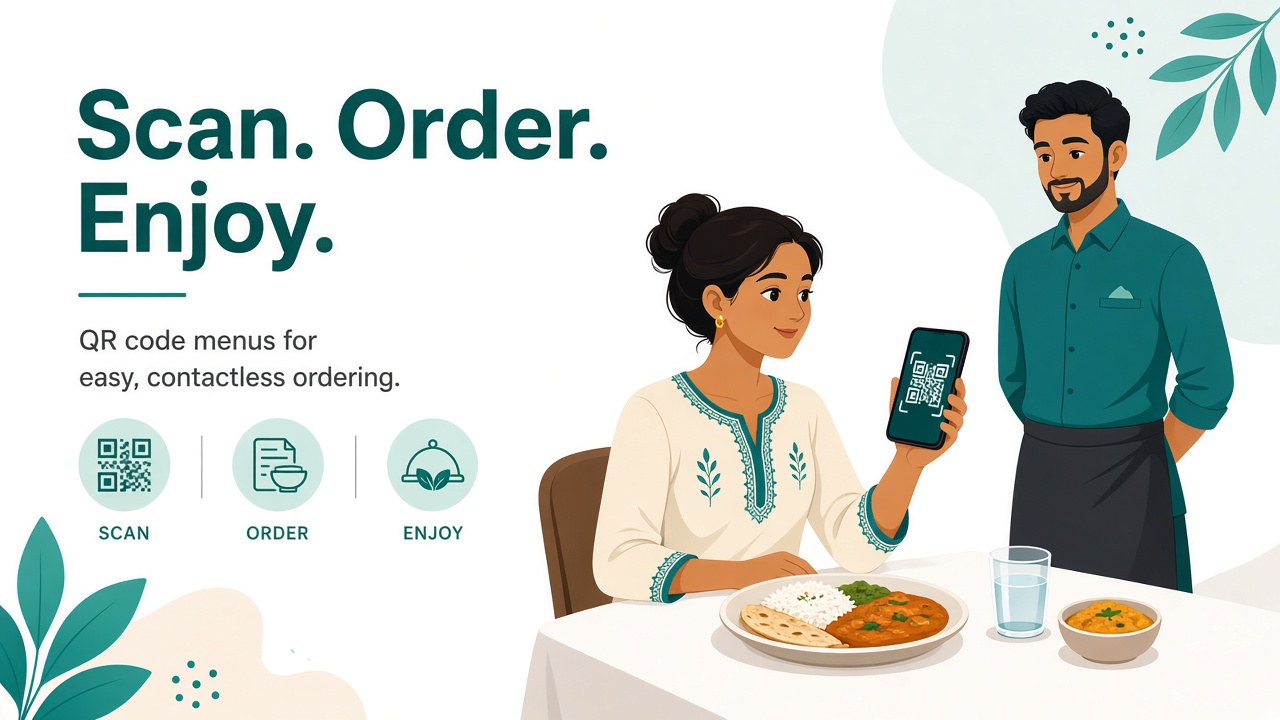
Dine-in with seating does not always need a standing kiosk. A QR on the table that opens the live menu, sends the order to the same kitchen queue, and lets the guest pay later or at settle often costs less hardware and still removes the “waiter, one more chai” round-trip.
Use a kiosk for walk-up peaks. Use QR for seated tables. Mixing both is fine if both write into one POS — two systems that export overnight will disagree by Tuesday.
What to measure in the first month
Average time from open screen to paid order. Percent of tickets with modifiers attached correctly. Cancels after payment. If those three do not improve, the menu layout or the payment step is wrong — not “guests hate technology.”
Staff still own hospitality: explaining the first week, helping elders, and fixing a stuck screen. The kiosk removes typing, not the person.
Questions people ask
When should an Indian restaurant use a self-service kiosk?
When walk-up peaks create a till queue — QSR, bakery takeaway, campus cafés — and the menu is short enough that guests can order without a long explanation.
Is a table QR better than a kiosk for dine-in?
Often yes for seated service. A QR opens the live menu and sends the same kitchen ticket without a standing machine. Use a kiosk for counter peaks; use QR for tables.
What should a restaurant measure after installing a kiosk?
Time from open screen to paid order, modifier accuracy on tickets, and cancels after payment. If those do not improve, fix menu layout or payment before blaming guests.