Restaurant inventory and wastage: the leak between purchase and plate
Food cost does not jump in one dramatic week. It drips — a ladle too heavy, a crate uncounted, a cancel after the kitchen already fired the item.
YYUVAVI/POS editorialWritten for people who run the floor
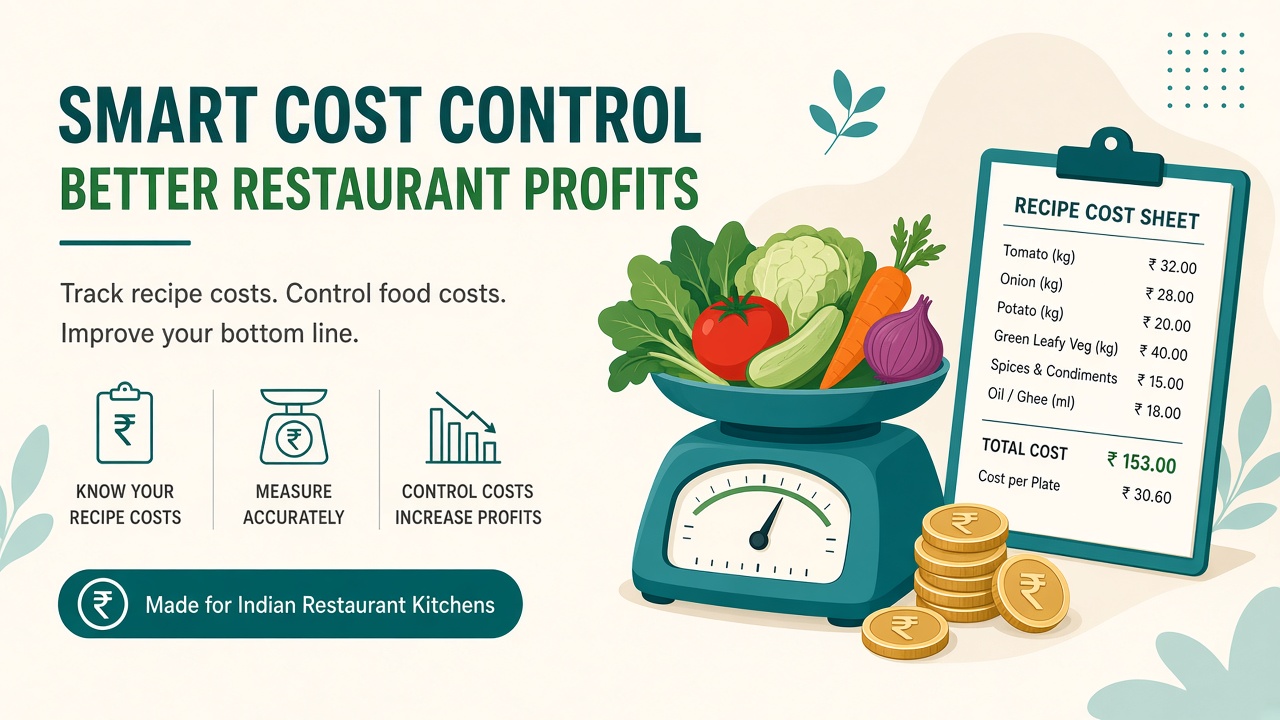
Purchase is not the whole story
A tight purchase order still loses money if the store room has no count, the recipe has no weight, and the till does not deduct stock when an item sells.
Start with the twenty ingredients that make eighty percent of your food spend. Exact recipes and weekly counts on those twenty beat a perfect system on two hundred items nobody maintains.
Three places wastage hides
Prep trim that nobody records. Over-portioning on busy nights when the ladle is the only measure. Cancels after the ticket fired — the plate is cooked, the bill is void, the cost stays.
- A wastage log with reason codes: spoilage, spill, cancel, staff meal
- Portion scoops for the five highest-cost dishes
- Cancel reasons named on the POS, reviewed at day close — not left blank
Variance is a weekly conversation
Theoretical usage from sales versus counted stock should be close. A growing gap is either theft, recipes that lie, or portions that drifted.
Do not wait for month-end. A fifteen-minute count of high-value items every Monday catches a problem while the shift that caused it still remembers what happened.
Software only helps if the floor feeds it
An inventory module with empty recipes is a spreadsheet with extra clicks. Link each top seller to a recipe, deduct on sale, and make receiving a named step when stock arrives — not a late-night estimate.
When the numbers on the screen match what the chef sees in the fridge, food cost stops being an argument and becomes a dial you can turn.
Questions people ask
How do restaurants control food wastage in India?
Link top recipes to sales so stock deducts automatically, log wastage with reason codes, use portion scoops on high-cost dishes, and compare theoretical usage to a weekly count.
What inventory should a restaurant count first?
The twenty ingredients that make most of food spend. Perfect counts on everything matter less than reliable weekly variance on the expensive few.