Where food cost actually leaks in a restaurant
Nobody loses margin in one dramatic event. They lose it in small amounts, every day, in four places, and the monthly count arrives too late to name any of them.
YYUVAVI/POS editorialWritten for people who run the floor
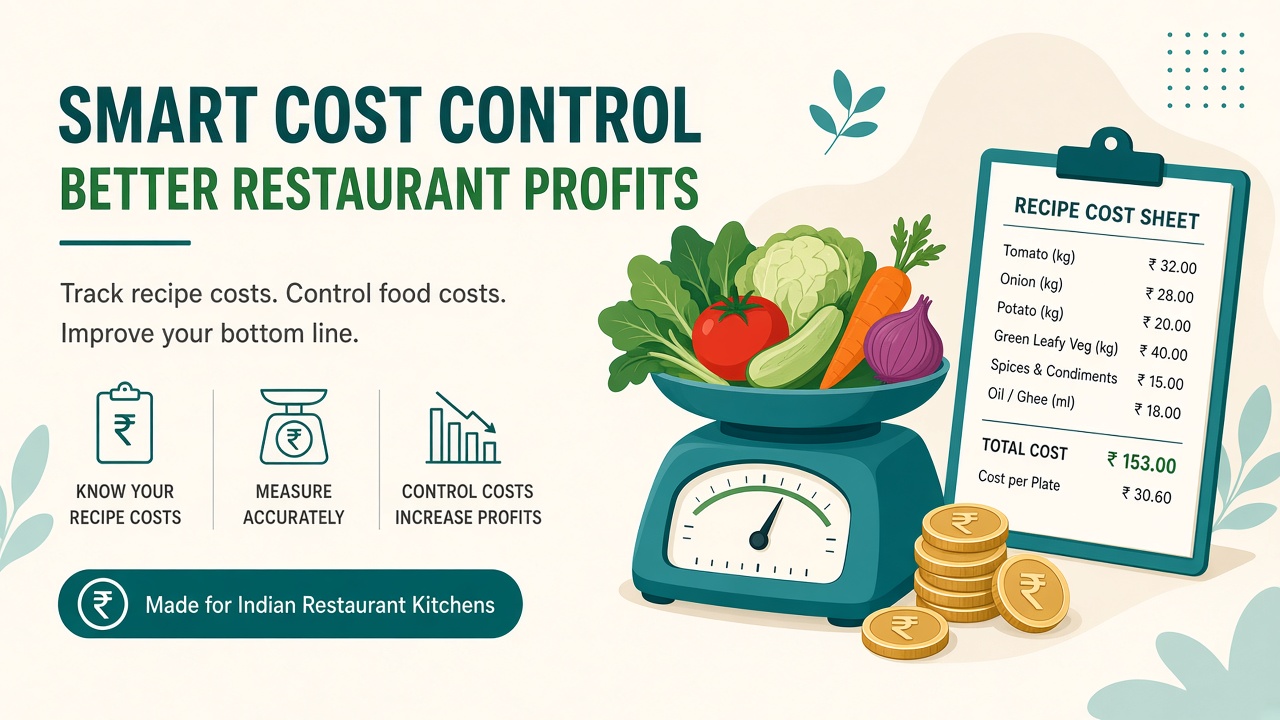
The four leaks
Almost every rupee that disappears between the purchase and the plate disappears in one of these. They are listed in the order of how much they usually cost, which is not the order people usually worry about them in.
- Portioning. A gravy served by eye rather than by ladle drifts upward over a month, and nobody can point to the day it changed.
- Purchase price drift. The vendor raises a rate slightly, the menu price does not move, and the difference stays invisible until it is large.
- Wastage and spoilage, most of it in prep rather than on the plate.
- Staff meals and quiet consumption, which is the one everybody suspects first and is rarely the biggest.
Why a monthly stock count hides all of it
A count on the last day of the month tells you that you are short. It cannot tell you when, in which shift, or on which dish, and by then the shift is a month gone and nobody remembers it.
The number that is actually useful is not the total. It is the gap between what should have been used, given what was sold, and what was actually used. That comparison only means something if the window is short enough for somebody to still remember the week.
The smallest set of numbers worth tracking
The usual mistake is to try tracking two hundred ingredients, give up in the third week, and go back to counting nothing. A restaurant does not need full costing to stop losing money.
- The ten ingredients that make up most of your spend, usually oil, the main protein, dairy and a handful of staples
- Those ten counted weekly rather than monthly, by the same person
- Selling price against ingredient cost on your fifteen best-selling dishes, refreshed whenever a vendor rate changes
- Cancellations and complimentary items with a name attached to each
Costing a recipe without it becoming a job
Recipe costing has a reputation for being a project that never finishes, and that reputation is earned by people who start with the full menu.
Start with the dishes that sell rather than the dishes that are interesting. Fifteen recipes cover most of what leaves a kitchen, and once those are costed the menu tells you something it never did before: which of your popular dishes are popular because they are cheap for the guest and expensive for you.
Questions people ask
How do Indian restaurants control food cost?
Track recipe cost against selling price, deduct stock when items sell, watch wastage, and review the dishes that move margin the most — not only top sellers by revenue.
What food cost percentage should a restaurant target?
Owners set their own target from real recipe costs. Software should show actual food cost against that target; inventing a universal percentage without your recipes is guessing.