Restaurant POS software cost in India (2026): what you actually pay
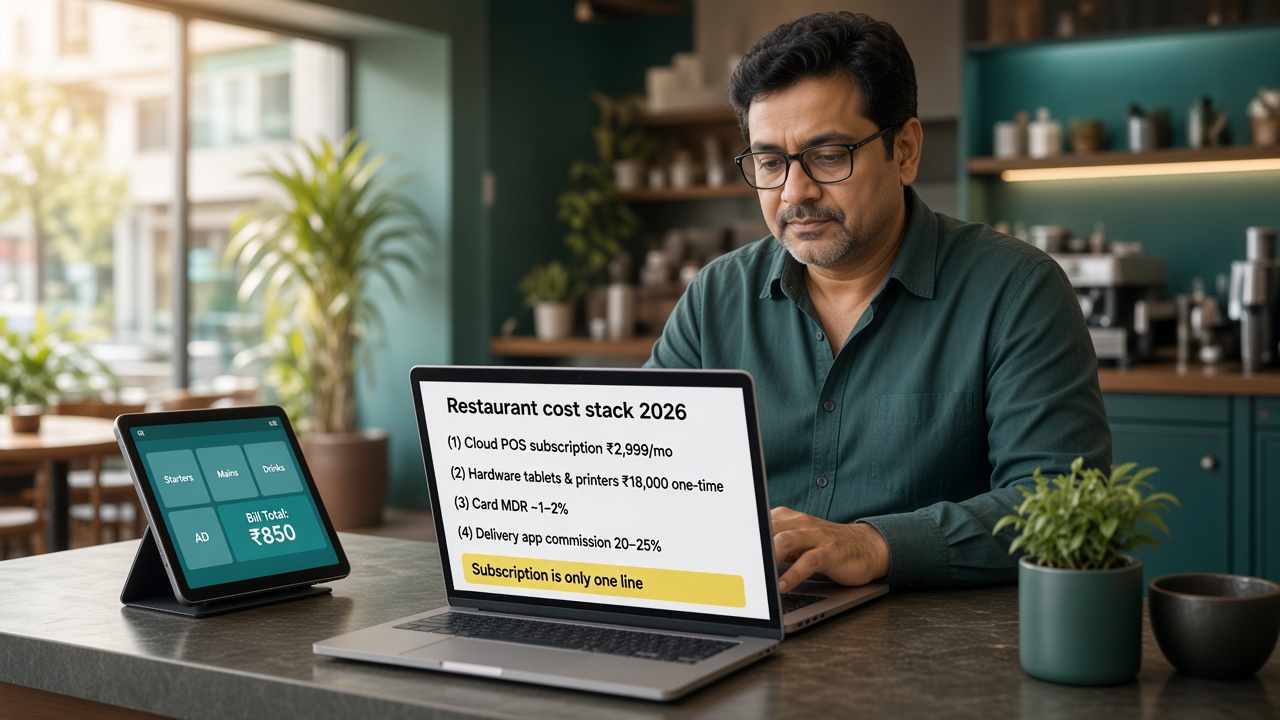
The quote on the proposal is rarely the number that shows up in your P&L. Four cost stacks sit under “billing software,” and only one of them is the monthly SaaS line.
YYUVAVI/POS editorialWritten for people who run the floor
Four stacks, one P&L line people forget
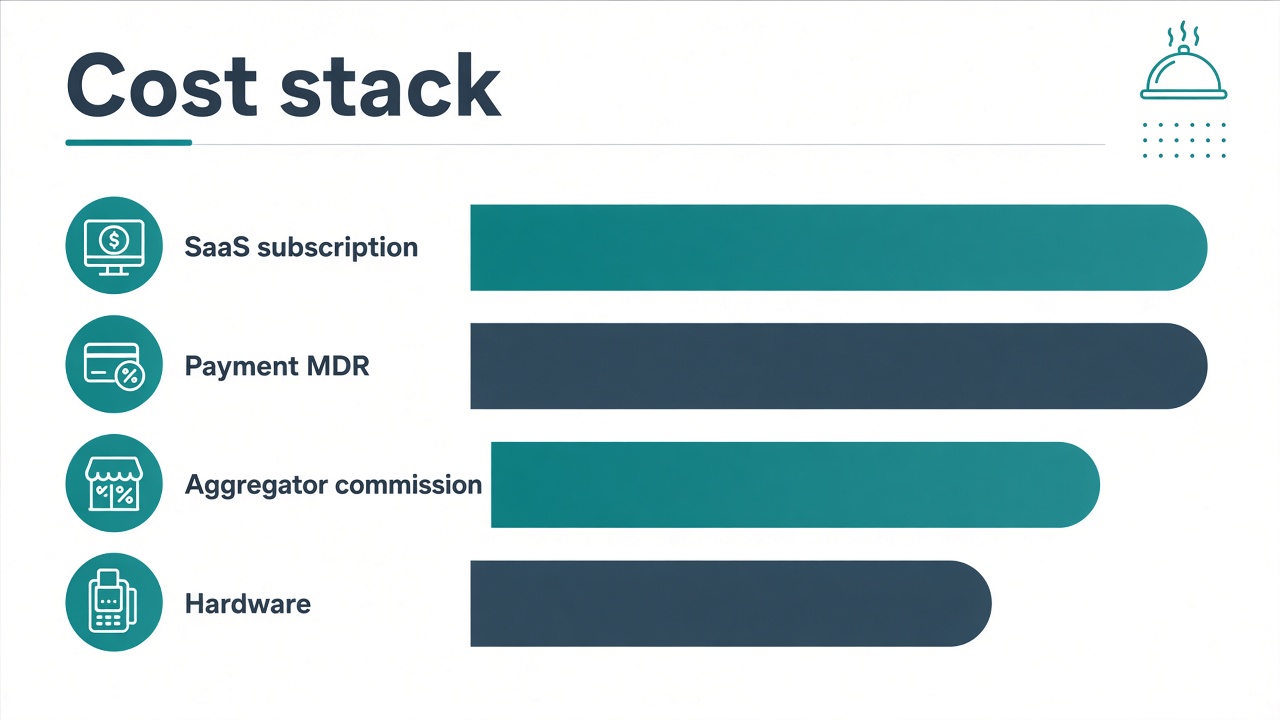
Owners usually compare the monthly POS fee first. That is the wrong first question. In 2026 a working Indian restaurant stack is four piles: the software subscription, terminals or tablets, payment MDR (UPI is often near-zero; cards are not), and delivery-app commission on every bag that leaves through a marketplace.
A cheap till that forces you to keep a second tablet for delivery apps and a third chat for WhatsApp orders is not cheap. You are paying staff minutes and missed tickets, not only rupees on a invoice.
- Software: cloud subscription per outlet or plan tier
- Hardware: tablets, printers, kitchen screens — buy or reuse phones
- Payments: UPI vs card MDR on the same bill
- Discovery tax: marketplace commission on orders that were going to come anyway
What a “free” year actually covers
Many quotes lead with free — free starter, free trial, or free for the first year. That is useful for getting live. It is not the same as free forever. After the promotional window (for example twelve months), the paid plan applies unless you cancel.
Before you train the whole floor on a free year, read what is included in that year and what upgrades cost later: recipe stock, multi-station kitchen, WhatsApp Business templates, or a second branch day close often sit on higher tiers. Migration mid-year costs more than knowing the price on day one.
Questions that sort real quotes from demos
Ask whether multi-terminal billing on one outlet is included, whether online and dine-in share one kitchen queue, and whether day close separates cash, UPI and card without a spreadsheet. If the answer is “add-on,” put that rupee on the same page as the base fee.
Also ask who owns the guest phone list when you leave. CRM lock-in is a cost that only appears when you try to switch.
- Is KDS / kitchen routing in the plan you are buying?
- Do delivery-app tickets land in the same queue as dine-in?
- Can you export customers and menu without a paid exit package?
- What happens offline for a few hours — and what syncs when the net returns?
A practical way to budget this year
For one outlet: budget software + one spare tablet + thermal printer + kitchen screen if paper KOTs already fail in rush. For growth: add WhatsApp Business messaging fees (Meta conversation charges) and design or social tools only if they sit inside the same login — a fourth app is another seat to train.
Then run one week of delivery commission as its own line. Many owners discover the marketplace tax dwarfs the POS subscription. Moving regulars to QR, WhatsApp or your own link is a cost project, not a marketing hobby.
What “good value” looks like in practice
Good value is one login for billing, kitchen, inventory and guest messaging — so you are not paying three vendors to disagree at 8pm. Bad value is a low sticker price and a human copying chat orders into the till.
Start on a plan you can grow inside. Revisit cost after thirty days of real tickets, not after the sales demo.
Questions people ask
How much does restaurant POS software cost in India in 2026?
Cloud subscriptions vary by plan and outlets; budget also for tablets or printers, card MDR, and delivery-app commission. The SaaS line is often smaller than marketplace fees on repeat orders.
Is restaurant POS software free forever in India?
Usually not. Offers are often free for a limited period (for example the first year) or a short trial, then a paid plan. Check what the free window includes and when billing starts.
What should I ask before buying restaurant billing software?
Whether dine-in and online share one kitchen queue, whether multi-terminal is included, how day close splits cash and UPI, and whether you can export menu and customers if you leave.