Table turnover in rush hour: what Indian restaurants should measure
Turnover is not “push people out.” It is removing the dead minutes between ready-to-order, ready-to-eat, ready-to-pay and ready-to-reset.
YYUVAVI/POS editorialWritten for people who run the floor
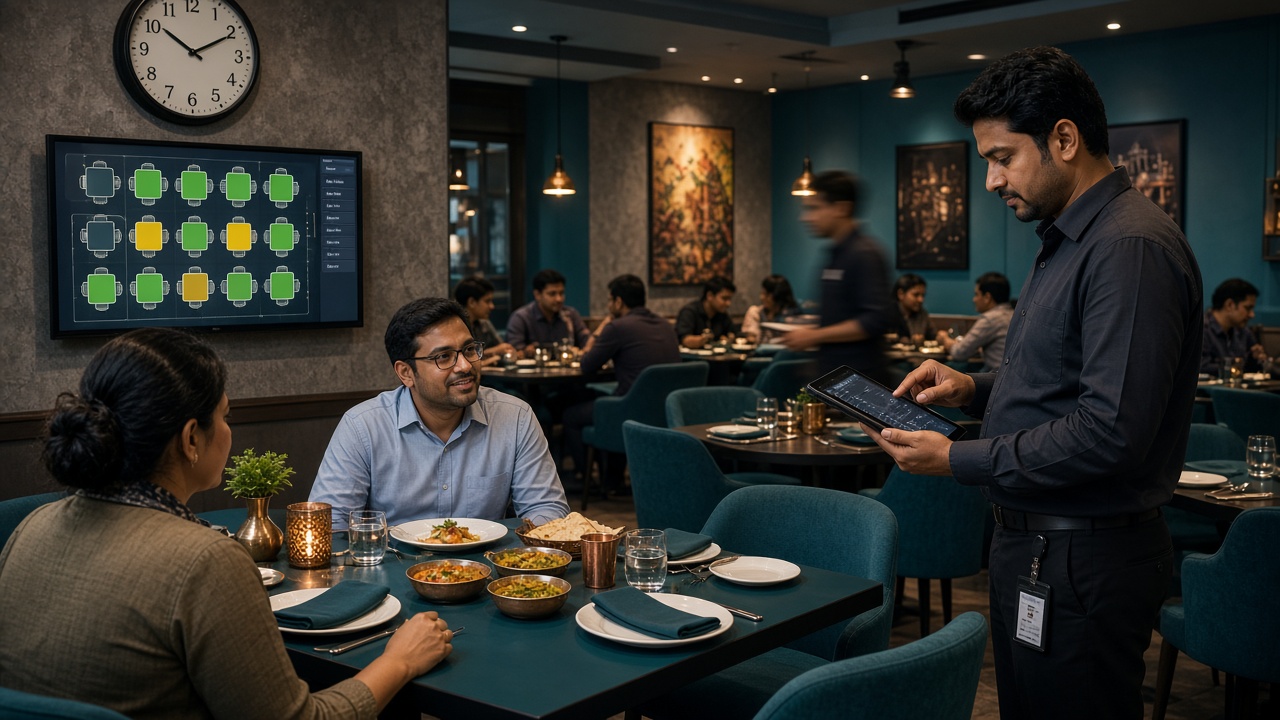
Four clocks, not one average
A single “average turn time” hides the leak. Split the meal into seat-to-first-order, order-to-food, food-to-bill-request, and bill-to-payment. Different fixes apply to each.
If seat-to-order is long, the menu or QR is slow. If order-to-food is long, the kitchen queue or prep is the bottleneck. If bill-to-payment is long, the guest is waiting on a human with a card machine — UPI at the table fixes that without hurrying the meal.
- Seat → order: QR / captain handheld / shortcodes on the till
- Order → food: KDS age and station routing
- Food → bill: clear “ready for bill” signal on the table status
- Bill → pay: amount-locked UPI or pay-link, not typed QR
Floor status the whole team can see
Yellow running, green bill printed, free for reset — colours on a floor map stop captains walking every section to “see who is done.” When the bill prints, bus and reset should already be moving, not waiting for a shout from the cashier.
Assign a captain to a section. Accountability for slow turns is impossible when everyone owns every table.
Kitchen ticket age is a turnover tool
A display that sorts by time-in-queue beats a pile of paper KOTs. Expo needs to know which table has waited longest — not which ticket was printed last.
Hold and fire courses deliberately for fine dine; for QSR and casual, long holds are usually forgotten tickets. Measure 86s that force remakes — remakes destroy turns more than careful plating does.
Payment is the last dead minute
Many Indian rooms lose eight to twelve minutes after the guest is ready to leave: find staff, print, type UPI amount, wait for confirmation, settle. An amount-locked QR from the POS closes that gap without making the meal feel shorter.
Split bills should not mean void-and-rewrite. Item or equal split that keeps one audit trail keeps the cashier at the terminal instead of rewriting the party’s night.
What not to do
Do not clear plates aggressively while guests are still talking — that earns bad reviews faster than it earns a turn. Do not upsell a slow dessert course in a peak where the waitlist is forty minutes; save the upsell for early evening.
Publish a target turn for lunch vs dinner. Lunch can be tighter; dinner should feel unhurried even when the system underneath is fast.
Questions people ask
How can restaurants increase table turnover without rushing guests?
Cut dead minutes: faster seat-to-order (QR or handheld), visible kitchen ticket age, bill-ready table status, and amount-locked UPI so payment is not a ten-minute wait.
What table turn metrics should a restaurant track?
Seat-to-order, order-to-food, food-to-bill-request, and bill-to-payment — separately for lunch and dinner — instead of one blended average.
Does pay-at-table improve turnover?
Yes when the QR carries the live bill total from the POS. Guests leave when they are ready; staff stop hunting for a card machine mid-rush.