Delivery-app orders and dine-in on one kitchen queue
Rush fails when the floor and the delivery tablet speak different languages. One menu, one ticket format, one bump screen — that is the boring fix.
YYUVAVI/POS editorialWritten for people who run the floor
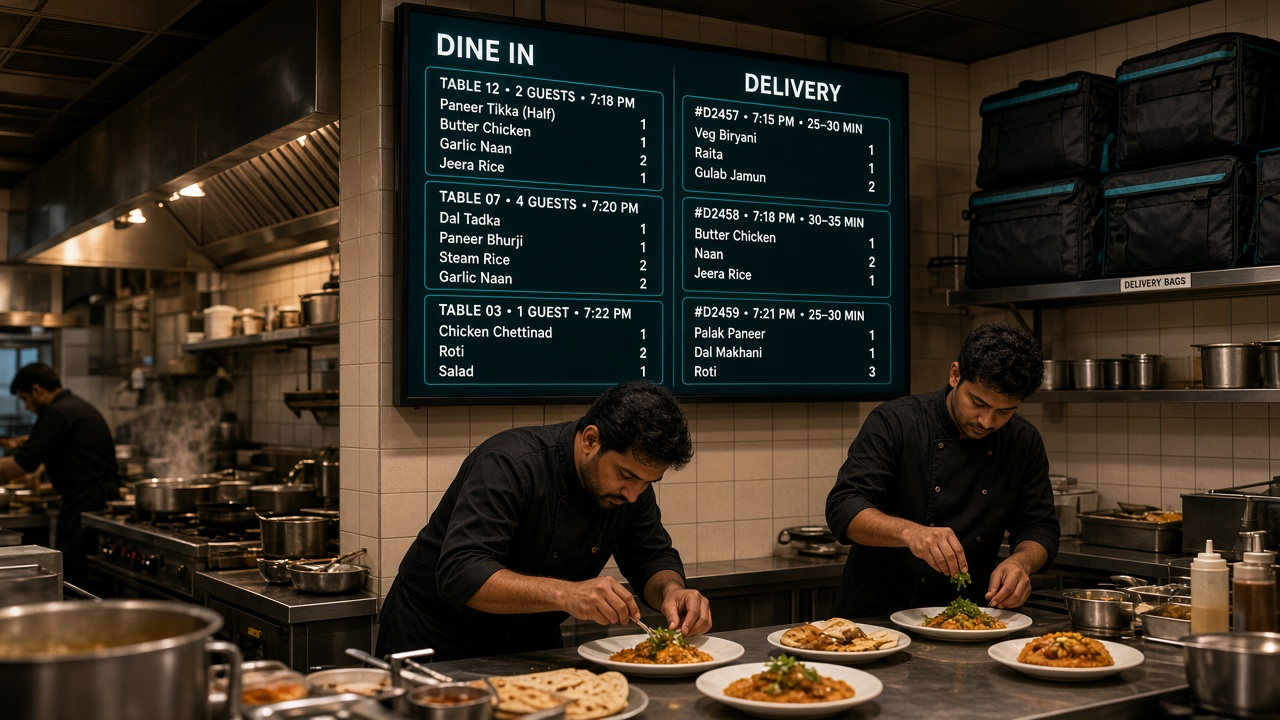
Why a second tablet is a silent tax
When dine-in runs on the POS and delivery apps run on a marketplace tablet, the kitchen hears two voices. Someone has to watch both. In peak, that someone is also plating — so a ticket sits unseen until a rider calls.
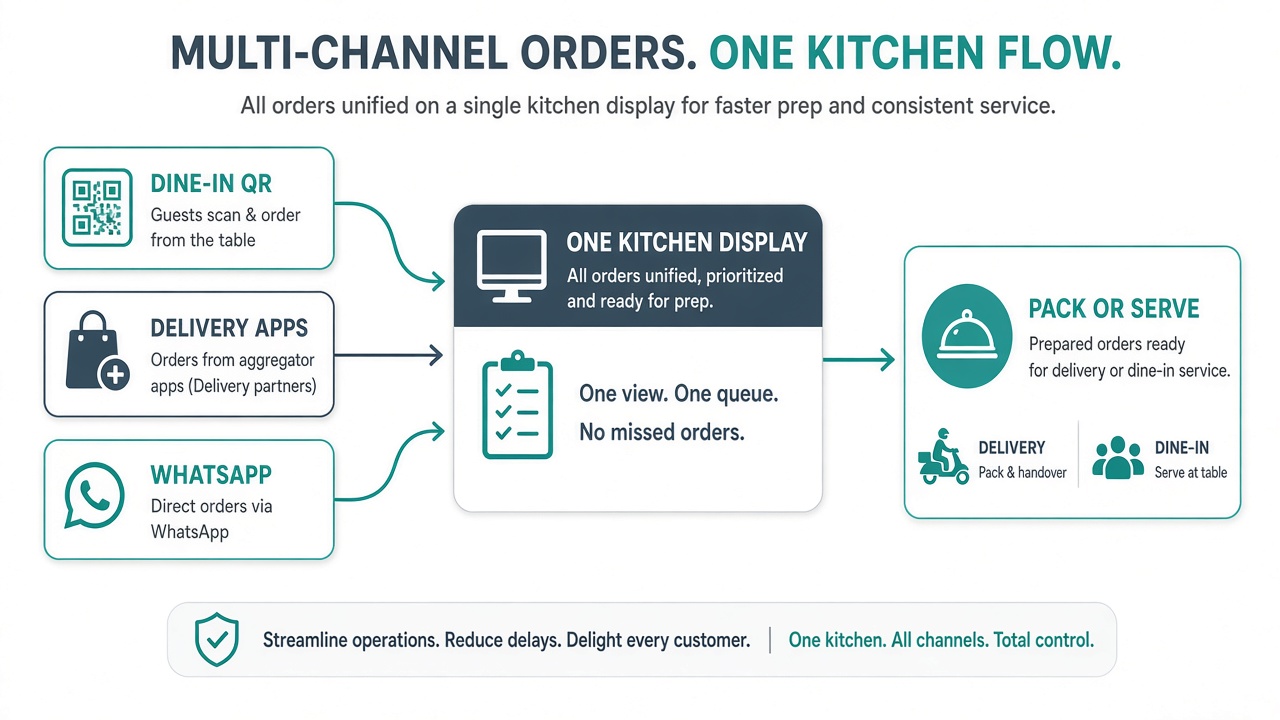
Integration is not “we receive a notification.” Integration is: the order becomes a kitchen ticket with the same modifiers, packing notes and bump flow as table four.
- One catalogue — prices and 86s stay in sync
- Channel label on every ticket (dine-in, delivery brand, pickup)
- Accept / prepare / dispatch states the floor can see
Mark the channel or pack the wrong bag
A ticket that only says “butter chicken × 2” is fine for one brand. With two delivery brands and a takeaway counter, the packer needs the brand or counter name in large type. Wrong-bag refunds are almost always a labelling problem, not a cooking problem.
Station routing helps when the bar and the hot kitchen share load: drinks and desserts should not wait behind a biryani ticket on the same scroll.
Stock and 86s have to travel both ways
If paneer runs out on the floor and the delivery menu still sells paneer tikka for twenty minutes, you will cancel paid orders and take the rating hit. 86 on the POS must push to online menus — or a human has to remember, which fails every festival week.
The reverse matters too: when you pause the store on a marketplace at midnight, the dine-in floor should still bill. Closing online is not closing the restaurant.
What to measure after you connect
Watch ticket age on delivery vs dine-in, cancel rate after accept, and how often staff still retype from a marketplace screen. If retyping continues, the integration is theatre.
Also watch food cost on delivery SKUs. Packaging and freebie chutneys change recipe cost; if inventory only deducts the dine-in recipe, delivery quietly burns margin.
- Median minutes from accept to packed
- Wrong-bag / missing-item complaints per 100 delivery orders
- Menu 86 lag — minutes until online matches the till
Start with one kitchen, one truth
Connect the highest-volume delivery channel first. Train bump rules for a week. Only then add the second marketplace. Two half-connected apps are worse than one solid queue.
Questions people ask
Should delivery-app orders and dine-in share one kitchen display?
Yes. One queue with a clear channel label on every ticket reduces missed bags and stops staff watching a second marketplace tablet during rush.
What breaks when delivery menus stay open after an item is 86'd?
Guests pay for dishes you cannot cook, then cancel or rate you down. An 86 on the POS must push to online menus within minutes.
How do you avoid wrong bags with multiple delivery brands?
Print the brand or counter name large on every ticket and packing label. Wrong bags are usually a labelling failure, not a recipe failure.