21 September 2026
When Google answers “restaurants near me” without a click
Discovery still starts on Google. Increasingly the answer is summarised before anyone visits your site — so the profile and the facts have to be quote-ready.
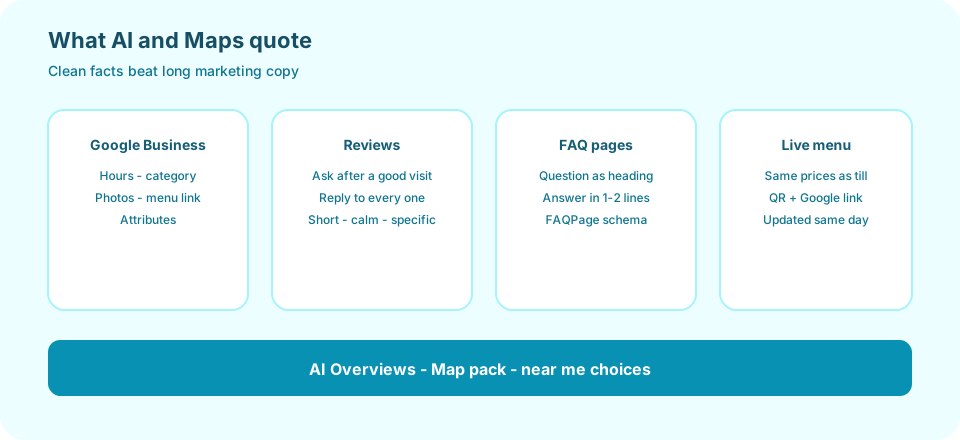
What answer engines lift
Clear questions and direct answers on your site, accurate hours and categories on Google Business Profile, recent photos, and reviews you actually reply to. Vague marketing paragraphs are skipped; a two-sentence definition of what you serve and where is not.
If your menu prices on Google disagree with the till, the overview will eventually trust neither.
The profile is the homepage for nearby search
Most “near me” journeys never open your marketing site. They open the map pack. Hours, phone, category, attributes (dine-in, takeaway), and a menu link that works on mobile decide whether you appear and whether someone chooses you.
- Festival hours updated the same day you change them on the door
- Photos from this month, not only opening day
- Every review answered — short, calm, specific
Pages that earn a citation
A restaurant software or location page that leads with the question people ask (“What is restaurant software?”, “Does this POS do GST?”) and answers in the first screen is easier to quote than a feature grid. FAQs with the same wording as real searches help both classic SEO and AI summaries.
What not to do
Do not stuff keywords into the business name. Do not buy fake reviews. Do not leave three duplicate listings for one outlet. Those tactics get cleaned up, and the cleanup is public.
Questions people ask
How do AI Overviews affect restaurant search in 2026?
Many nearby searches get an answer before a click. Clean Google Business facts, reviews you reply to, and pages with direct Q&A are what those summaries can quote.
What is the most important local SEO task for a restaurant?
Keep Google Business Profile accurate — hours, category, photos, menu link — and reply to every review. That profile is the homepage for most “near me” journeys.